
1. MYTH: A passive house will be too expensive to build.
Building a Passive House can be expensive, but it doesn’t need to be. Recent research shows the cost to upgrade to a new Passive House can be between 5 - 45%. With our experience in design and construction, we have lowered this cost to between 0 - 5% while still achieving the same overall energy performance.
When you add your energy bill to your mortgage costs, a passive house can cost the same or less than a code-built home. More details on this topic in a blog dedicated to cost is coming soon! The bottom line is: if you can afford to build a new house, you can afford a Passive House.
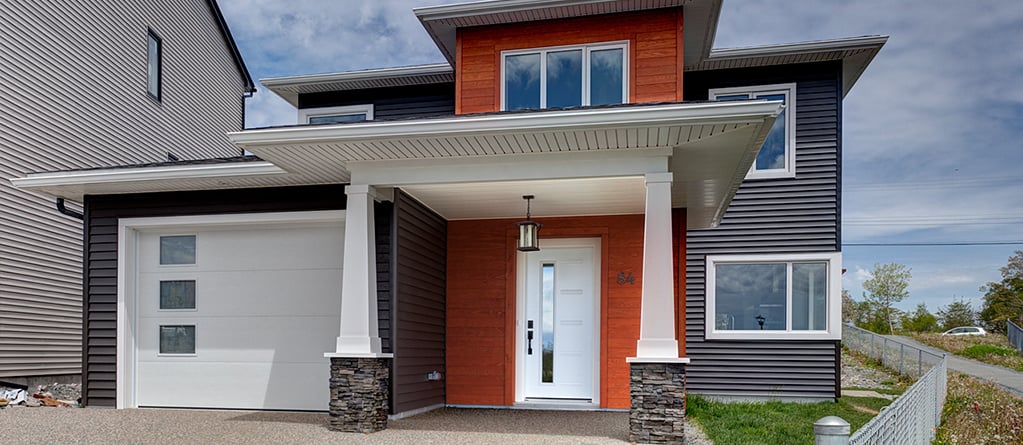
Dunvegan Halifax, a Passive House stock plan.
"For this project, we wanted to test the market value of a Passive House compared to homes built with standard building methods." ~ Natalie Leonard, company founder
2. MYTH: A Passive House will limit my style options.
While there may be a perception that a Passive House has to look a certain way, that is not true. A Passive House can look like any other home on the street or can it can be designed to reflect your unique style. In our designs, the only thing you can see that identifies a Passive Home is the deep interior window sills which our clients love.
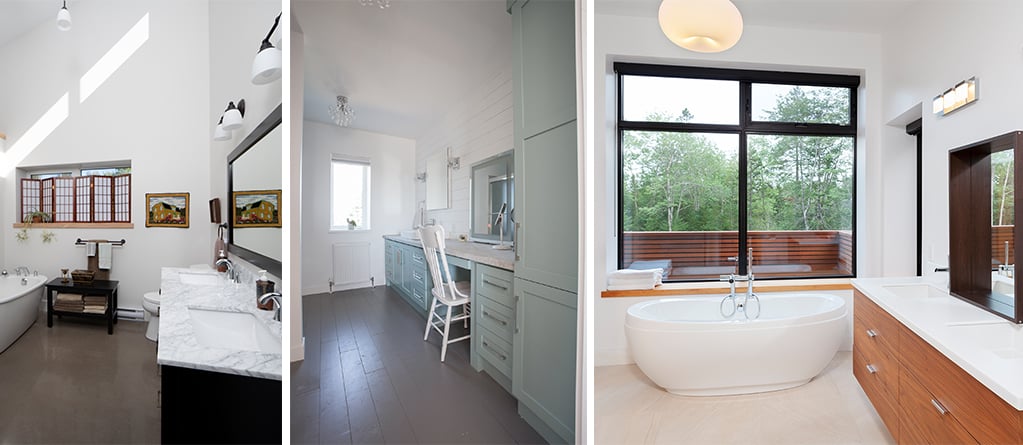
Your house, your way. Whether it's a custom design or a stock plan, the look and feel suits your life, style, and budget.
3. MYTH: I need perfect solar orientation for a Passive House.
While the sun can contribute up to 50% of the required heat in a Passive House, it is not mandatory to achieve the targets. It certainly makes it easier, but careful design and detailing can make up for the lack of passive solar heat.
With or without good solar access, the Passive House principles are essential to maintain ongoing comfort inside the home.
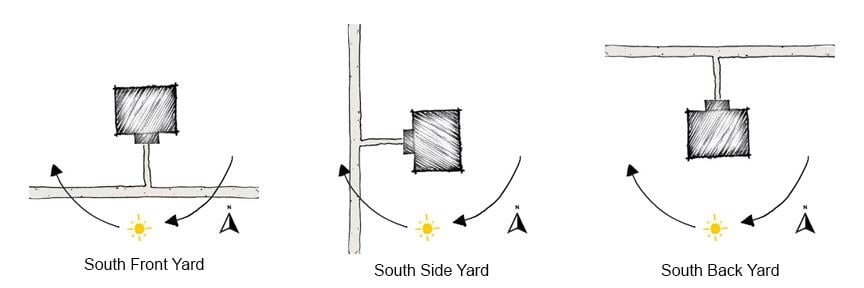
Solar orientation diagrams are use to describe which part of the house has passive solar potential.
4. MYTH: An air-tight house will grow mould and rot.
Cold drafts account for 40 -50% of all heat loss in conventional new homes. Air leakage through the building assemblies also moves large amounts of moisture into the walls. This can cause mould, rot and building failure. Air tightness actually prevents these issues.
All high-performance homes have an HRV ventilation system that provides continuous fresh air. The combination of an air-tight building skin with efficient ventilation system actually results in much higher indoor air quality. Passive House is a healthier building and a refuge for those with asthma and allergies.
5. MYTH: I can't open my windows in a Passive House.
Passive Houses take advantage of natural ventilation. Operating windows are carefully placed in the design. During the summer, cross ventilation flushes the heat from the house with cool night air.
During a hot and humid summer the windows are closed to keep the heat out, but opening them in the shoulder seasons is very effective for cooling.
6. MYTH: A Passive House doesn't need a heating system.
The size of a heating and cooling systems depends on both the performance of the building envelope and the local climate. In the milder climate, the peak heat load of a Passive House is so small the heat can be delivered through the ventilation ducts. In our cold Northern climates we usual spec a tiny, point-source heat pump, eliminating the need for the central furnace of a conventional home.
7. MYTH: I can't have a fireplace in my passive home.
We all love the comfort and beauty a fireplace can provide in a home.
We have certified a number of projects with propane fireplaces or wood stoves. These units provide the comfort of a hearth in the home and also can be used for back up heat in winter power outages.
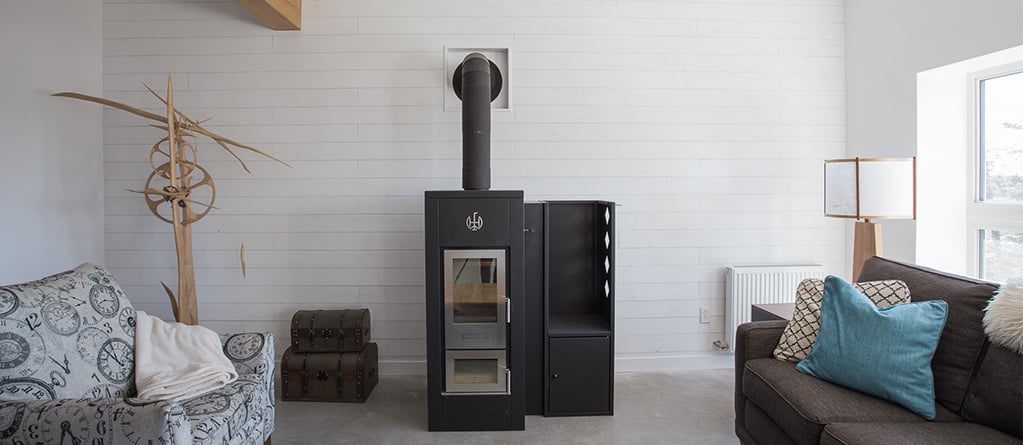
Rocky Point custom designed Passive House with a wood-burning fireplace.
8. MYTH: A passive house must utilize German-made, imported components.
This is one that we hear a lot. However, we don't need to use imported, certified components to achieve the Passive House targets in North America. Instead, we specify locally available building components that balance; cost, warranty, service and high performance.
In our designs we utilize materials and equipment that are familiar to local trades people. We assemble them with new building methods to achieve the superior Passive House performance. This approach is a critical cost control factor!
9. MYTH: My builder won't be able to build a Passive House design.
While it's always beneficial for a builder to be specifically educated in Passive House it isn't required to understand the way we build. Any quality builder with an interest in learning new building methods can work with our plans.
We have worked with 25+ first-time builders on their Passive House projects and have achieved excellent results. If you want the comfort and savings of a Passive Home, the availability of a certified builder shouldn't be a barrier.
10. MYTH: In order to build a Passive House I have to pay for expensive certification.
We define a Passive House as one that integrates the PH strategies and rigorous energy modelling that informs the design.
Some homeowners believe so strongly in the Passive House movement that they want to help promote it by certifying their project.
To date, approximately 15% of our Passive House projects have earned certification.
Many PH homeowners have chosen instead to save the cost of certification and invest in solar panels to achieve Net Zero.
11. MYTH: Passive House design is a boutique product only affordable to the wealthy.
Up until now, designing a Passive House required hiring an architect or designer that specialized in Passive House. The fees for custom design services can be expensive, frequently costing between 5%-10% of your construction budget.
To save you time and money, we developed a series of ready-made building plans. These home plans bring Passive House to homeowners at a fraction of the cost of custom design.
Our experience proves that if you can afford to build a new home, you can afford to build a Passive House!
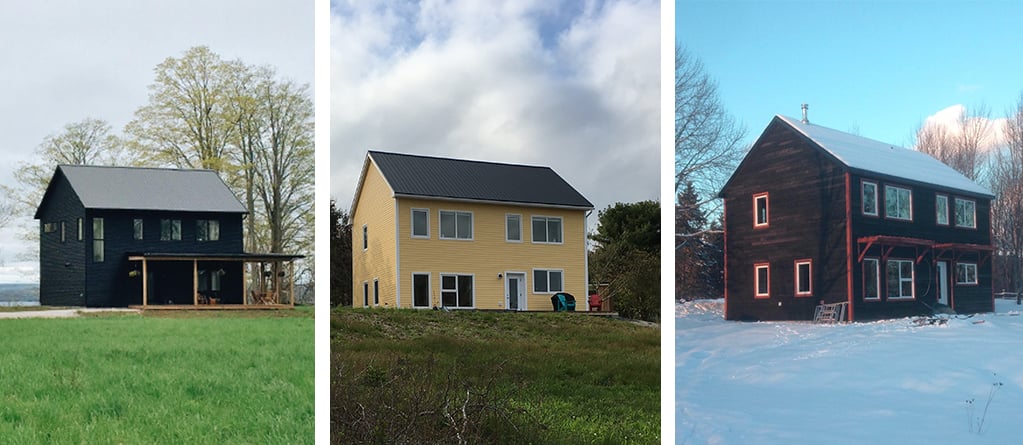
These three North Glen Passive House stock plans have been built for the same cost per square foot as code-built equivalents in their regions but with better efficiency and comfort.
Do you have a question, or have you heard a myth about Passive House that wasn't covered here? Ask us your burning question today and we'll feature your questions in future posts.
